How to Avoid Driveway Sealcoating Mistakes Through Proper Surface Preparation and Weather Timing
Protecting asphalt driveways against ultraviolet solar radiation, water infiltration, and petroleum degradation requires applying high-quality protective sealcoat emulsions at regular intervals. How to Avoid Driveway Sealcoating Mistakes. Many property owners inadvertently damage their asphalt surfaces by rushing application steps, ignoring weather windows, and applying excessive sealer thicknesses. Common errors include sealing newly paved asphalt before complete binder oxidation occurs, applying emulsions over dirty surfaces, and neglecting structural crack repairs.
Addressing these application failures involves understanding bitumen chemistry, emulsion curing mechanisms, and surface preparation protocols. Correcting improper application habits prevents premature peeling, tracking, and rapid surface wear across residential and commercial pavements.
Mastering successful sealcoating practices requires identifying operational oversights, controlling application rates, and implementing strict quality assurance standards. This comprehensive reference manual establishes an analytical framework for diagnosing sealcoating errors and executing durable asphalt maintenance projects.
Understanding How to Avoid Driveway Sealcoating Mistakes
Curing Time Violations and New Asphalt Sealing
Mastering how to avoid driveway sealcoating mistakes starts with respecting the mandatory curing timeline required for newly laid asphalt surfaces. Fresh hot mix asphalt contains volatile petroleum oils that must oxidize and evaporate before any protective sealcoat barrier is applied. Sealing new asphalt too early traps remaining solvents inside the pavement matrix, causing the surface to soften, bubble, and disintegrate under vehicle tires.
Property owners must wait a minimum of six to twelve months before applying sealcoat emulsions to freshly paved residential driveways.
Surface Contamination and Power Washing Errors
Evaluating how to avoid driveway sealcoating mistakes requires removing dirt, oil stains, and organic debris thoroughly before spreading any liquid sealer. Applying emulsion over oily spots or loose dust prevents the product from bonding to the asphalt aggregate, leading to peeling and flaking. Power washing removes surface dirt, but failing to let the pavement dry completely traps moisture under the new sealcoat layer.
Contractors must ensure the driveway dries for at least twenty-four hours following power washing before application begins.
Excessive Thickness and Multi-Coat Accumulation
Understanding how to avoid driveway sealcoating mistakes involves controlling application thickness to prevent alligator cracking and surface flaking. Applying multiple thick coats in a single day or using excessive sealer volume prevents proper water evaporation and curing. Thick sealer films dry on the surface while remaining soft underneath, creating slip planes that peel away under turning vehicle tires.
Applying two thin, uniform coats with adequate drying time between applications ensures a durable, long-lasting protective barrier.
Weather Window Violations and Temperature Limits
Analyzing how to avoid driveway sealcoating mistakes demands monitoring ambient air and pavement temperatures throughout the entire curing window. Applying emulsion when temperatures drop below fifty degrees Fahrenheit or during high humidity prevents proper chemical curing and coalescence. Cold or damp conditions cause the sealer to wash away during the first rainstorm, leaving the driveway unprotected and messy.
Paving professionals must verify that temperatures remain above fifty degrees Fahrenheit for at least twenty-four hours post-application.
Deep Contextual Background of Protective Asphalt Emulsions
Evolution of Pavement Sealcoat Chemistry
Asphalt sealcoat chemistry evolved from raw coal tar derivatives into polymer-modified asphalt emulsions and refined petroleum-based sealers designed for environmental safety. Early maintenance products relied heavily on high-VOC coal tar, which offered chemical resistance but posed severe environmental and dermal toxicity concerns. Modern civil maintenance utilizes asphalt-based emulsions enhanced with latex polymers and mineral fillers to improve flexibility and UV resistance.
Stricter environmental regulations and municipal ordinances have accelerated the transition toward eco-friendly, water-based pavement sealants. Contractors must adapt their application techniques to match modern emulsion curing characteristics.
The Role of Bitumen Oxidation and UV Degradation
Solar ultraviolet radiation oxidizes asphalt binder, stripping away volatile oils and leaving aggregate particles exposed and loose on the surface. Sealcoating acts as a protective sacrificial wear layer that shields the underlying bitumen from direct solar radiation and moisture intrusion. Understanding oxidation rates helps property owners schedule maintenance intervals before aggregate ravelling compromises the structural mat.
Neglecting regular sealcoating accelerates surface degradation, shortening the overall service life of the driveway pavement.
Conceptual Frameworks and Mental Models for Sealcoating Execution
The Substrate Adhesion Matrix
The substrate adhesion matrix evaluates the chemical bond strength between the protective sealcoat emulsion and the underlying asphalt aggregate matrix. If dust, oil, or moisture contaminates the interface, adhesion fails instantly under shear stress from vehicle tires. Achieving permanent bonding requires absolute surface cleanliness, dry conditions, and compatible emulsion chemistry.
This mental model emphasizes that surface preparation dictates ninety percent of sealcoating success.
The Thermal Curing Window Model
The thermal curing window model tracks water evaporation rates and polymer coalescence during the critical first twenty-four hours after application. Solar radiation, ambient wind speed, and relative humidity dictate how quickly water-based emulsions cure into hard, protective films. Applying sealer late in the afternoon in high-humidity environments prevents complete curing, resulting in rain washout damage.
Understanding thermal curing windows prevents weather-related application failures.
The Volumetric Application Rate Equilibrium
The volumetric application rate equilibrium balances sealer volume against surface texture roughness to prevent pooling and excessive film thickness. Smooth, old pavements require lower application rates, while rough, weathered surfaces absorb more emulsion to fill surface voids. Maintaining correct gallon-per-square-foot ratios ensures uniform protection without surface cracking.
Key Categories and System Variations of Application Errors
Premature Sealing of New Pavement
Applying protective sealcoat to asphalt surfaces before volatile oils fully oxidize causes the pavement to soften and rut under tires. New asphalt requires months of traffic exposure and sunlight to release internal solvents and achieve structural stability. Sealing too early seals solvents inside, destroying the structural integrity of the upper asphalt lift.
Waiting through a full seasonal cycle ensures new pavement is fully cured and ready for protective coating.
Inadequate Surface Cleaning and Degreasing
Failing to scrub and degrease oil and transmission fluid stains prior to sealcoating guarantees localized product delamination and peeling. Petroleum drippings prevent water-based emulsions from adhering to the aggregate surface, causing the sealcoat to lift away in flakes. Treating oil spots with heavy-duty commercial degreasers and bonding primers ensures uniform adhesion.
Thorough surface cleaning protects the entire sealcoat investment from premature spot failures.
Ignoring Structural Crack Repair Before Sealing
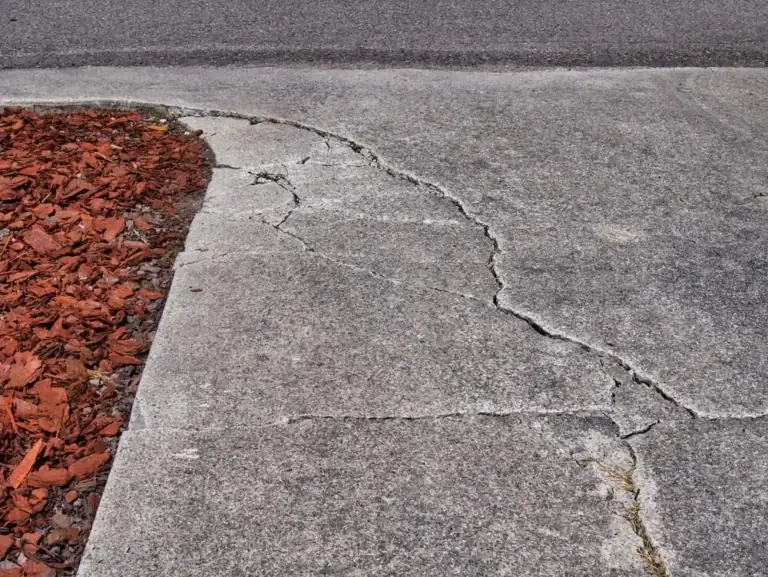
Sealing an asphalt driveway without filling and routing dynamic structural cracks first allows water to bypass the protective barrier. Unsealed cracks permit water to infiltrate subgrade soils during rainstorms, triggering freeze-thaw damage and foundation softening. Contractors must fill all cracks exceeding a quarter-inch width with rubberized hot-pour sealant prior to sealcoat application.
Addressing cracks before sealing preserves subgrade stability and prevents structural pavement deterioration.
Over-Dilution of Sealer Emulsions
Diluting concentrated sealcoat emulsions with excessive water beyond manufacturer specifications reduces product durability and wear resistance. Over-diluted sealer dries into a thin, weak film that wears away under vehicle tires within a few months of application. Contractors must measure water additions precisely, adhering strictly to manufacturer technical data sheet guidelines.
Maintaining proper solid content ratios ensures the dried film provides long-term UV and water protection.
Uneven Manual Application and Squeegee Ridges
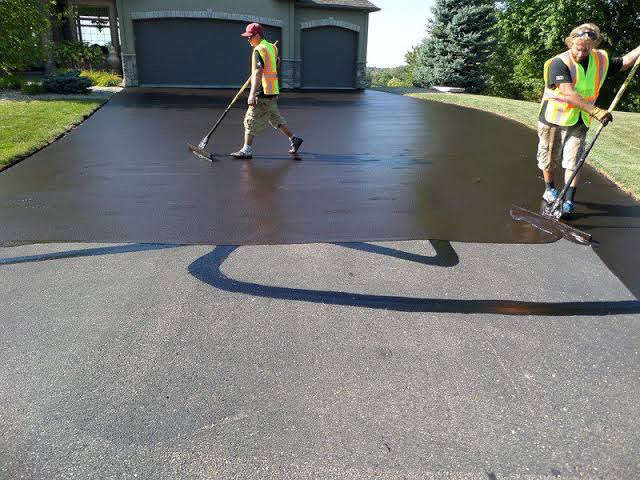
Spreading sealcoat manually using worn squeegees or brooms without back-rolling creates thick ridges, puddles, and uneven texture profiles. Puddled sealer areas take days to dry internally, remaining soft and prone to tracking onto concrete walkways and garage floors. Using mechanical spray rigs followed by professional squeegee spreading ensures smooth, uniform film thickness across the driveway.
Proper application technique eliminates unsightly ridges and prevents tracking issues.
Traffic Premature Opening Violations
Opening sealed driveways to vehicular traffic before the emulsion cures completely causes tire scuffing, rutting, and surface delamination. Heavy turning tires tear soft, uncured sealcoat films, ruining the uniform appearance and protective quality of the finish. Property owners must keep all vehicles off the driveway for a minimum of twenty-four to forty-eight hours post-application.
Respecting mandatory curing windows ensures the sealcoat achieves maximum hardness and durability.
Sealcoating Mistake Comparison Matrix
Strategic Decision Logic for Maintenance Planning
Selecting appropriate maintenance strategies requires evaluating pavement age, surface texture, crack severity, and local weather conditions. Driveways exhibiting severe aggregate raveling and deep cracks require structural patching and crack filling before sealcoating. Moderately weathered pavements achieve excellent protection through power washing, oil spot priming, and two thin coats of polymer-modified emulsion.
Aligning maintenance procedures with pavement condition ensures capital funds are spent efficiently.
Detailed Real-World Sealcoating Failure Scenarios How to Avoid Driveway Sealcoating Mistakes
Commercial Parking Lot Premature Sealing Disaster
A commercial property owner hired a low-bidding contractor to sealcoat a newly paved parking lot just three weeks after installation. Within two weeks of application, delivery trucks turning across the lot sheared the soft asphalt surface, creating deep tire ruts. Trapped volatile oils softened the upper asphalt lift, forcing the property owner to mill and repave the entire parking area at great expense.
Waiting a full year before sealing would have prevented this catastrophic structural failure.
Residential Oil Stain Delamination Fiasco
A residential homeowner applied a DIY asphalt emulsion sealcoat over a driveway containing several heavy motor oil stains without degreasing. Four weeks later, the sealcoat peeled away completely around every oil spot, exposing bare, weathered aggregate underneath. The unsightly spot failures required scrubbing the stains with commercial degreaser, priming the areas, and patch-sealing the bare spots.
Thorough surface preparation prevents embarrassing localized peeling failures.
Unfilled Crack Water Infiltration Failure
A suburban homeowner sealcoated an aging driveway without filling wide thermal cracks, assuming the black sealer would bridge the gaps. Heavy autumn rains penetrated the open cracks, softening the subgrade base and causing transverse settlement during winter freeze-thaw cycles. By spring, the unsealed cracks widened significantly, accompanied by edge spalling and structural pavement displacement.
Routing and filling cracks with rubberized hot-pour sealant prior to sealing is mandatory for structural longevity.
Over-Diluted Sealer Premature Wear Out
A property manager purchased budget sealcoat concentrate and diluted it with double the recommended water volume to cover a large apartment complex driveway. The resulting thin film provided a dark black color initially, but wore away entirely under tenant vehicle traffic within three months. The accelerated wear required re-cleaning and applying a commercial-grade, uncompromised sealcoat the same year.
Adhering strictly to manufacturer dilution ratios ensures lasting wear resistance.
Planning, Cost, and Resource Dynamics in Asphalt Maintenance
Comprehensive Direct and Indirect Cost Analysis
Executing successful asphalt sealcoating projects requires balancing direct material purchases against indirect operational expenses and equipment maintenance. Direct expenses include sealcoat emulsion concentrate, crack filler rubber, primer, and degreasing chemicals. Indirect costs encompass power washer rentals, push brooms, squeegees, safety gear, and traffic control cones.
Investing in high-grade polymer-modified emulsions prevents premature failure, reducing long-term maintenance expenditures and extending pavement lifespans. Comprehensive financial planning ensures real estate assets remain protected against environmental degradation.
Maintenance Budget Allocation Matrix
Tools, Strategies, and Support Systems How to Avoid Driveway Sealcoating Mistakes
High-Pressure Commercial Power Washers
Commercial power washers equipped with rotary surface cleaner attachments strip embedded dirt, moss, and loose aggregate particles efficiently. Proper power washing creates a clean, textured substrate that maximizes emulsion adhesion.
Power washing tools accelerate surface preparation while ensuring professional cleaning standards.
Hot-Pour Crack Melting Kettles
Hot-pour crack melting kettles heat rubberized asphalt sealants to precise application temperatures for deep structural crack sealing. Hot-pour rubber sealants expand and contract with thermal movement, preventing water infiltration across seasons.
Hot-pour equipment delivers commercial-grade crack protection that outperforms cold-pour latex jug sealants.
Mechanical Sealcoat Spray Rigs and Squeegees
Mechanical spray rigs pump emulsion evenly across large asphalt areas, while professional squeegees work the product into surface pores. Combining spray application with manual back-rolling ensures uniform film thickness and eliminates pooling ridges.
Mechanical application tools increase productivity while delivering superior surface finish quality.
Risk Landscape and Compounding Structural Failure Modes
Rain Washout and Emulsion Contamination
Rain washout occurs when unexpected rainfall strikes freshly applied water-based sealcoat before the emulsion has cured and coalesced. Uncured emulsion washes off the pavement into storm drains, contaminating local waterways and leaving the driveway streaked and unprotected. Checking meteorological forecasts and ensuring a twenty-four-hour dry window prevents catastrophic rain washout failures.
Weather monitoring protects materials and labor investments from sudden environmental damage.
Winter Freeze-Thaw Spalling via Trapped Moisture
Trapped moisture beneath impermeable sealcoats or unsealed cracks expands during freezing winter temperatures, causing surface spalling and flaking. If sealcoat is applied over damp pavement, the moisture cannot escape, creating vapor pressure that delaminates the coating film. Ensuring complete surface dryness prior to application prevents moisture entrapment and winter freeze-thaw damage.
Proper drying protocols protect sealcoat adhesion through extreme seasonal climate shifts.
Governance, Maintenance, and Long-Term Adaptation
Sealcoating Maintenance Protocol Checklist
Implementing a structured preventive maintenance schedule preserves driveway sealcoat integrity, extends pavement lifespans, and prevents premature wear. Proactive maintenance protects asphalt surfaces from UV oxidation and moisture damage over decades.
-
Biennial Inspection Schedule: Evaluate asphalt surface oxidation, aggregate loss, and crack conditions every two years.
-
Spot Degreasing Interventions: Treat oil and fluid drips with commercial degreasers promptly to prevent localized coating delamination.
-
Annual Crack Maintenance: Inspect and rout thermal cracks annually, filling openings with rubberized hot-pour sealant before winter.
-
Scheduled Sealcoat Renewal: Reapply a thin, uniform coat of polymer-modified emulsion every three to five years based on wear.
Measurement, Tracking, and Evaluation Frameworks
Technical Performance and Quality Control Indicators
Evaluating sealcoating project success requires tracking key quantitative and qualitative technical metrics regularly.
-
Leading Indicators: Pavement moisture meter readings, crack sealant depth measurements, emulsion dilution ratios, and ambient temperature logs.
-
Lagging Indicators: Dry film thickness mils, water repellency droplet tests, inter-coat adhesion peel resistance, and maintenance cycle intervals.
Common Misconceptions and Oversimplifications
Misconception: Sealcoating Fills Potholes and Repairs Structural Crages
Property owners frequently believe that applying heavy coats of sealcoat will bridge large cracks and fill deep surface potholes. Sealcoating is a thin protective coating, not a structural repair material; it cannot restore load-bearing capacity or level depressions. Structural damage requires hot mix asphalt patching and hot-pour crack filling before any protective coating is applied.
Understanding the limits of sealcoating prevents wasted effort on damaged pavements.
Misconception: More Sealcoat Application Layers Mean Better Protection
A widespread myth claims that applying four or five thick layers of sealcoat provides superior, multi-year protection against wear. Excessive coating thickness creates internal stresses, leading to massive alligator cracking, curling, and wholesale peeling of the sealer film. Two thin, uniform coats represent the optimal maximum threshold for asphalt sealcoat durability.
Restricting application layers to industry standards ensures long-term film stability.
Ethical, Practical, and Environmental Considerations
Modern asphalt maintenance practices emphasize environmental stewardship by utilizing low-VOC, water-based emulsions that eliminate toxic coal-tar runoff pollution. Protecting local stormwater drainage ecosystems from chemical contamination preserves community water quality and environmental health. Properly disposing of wash water and chemical degreasers prevents hazardous runoff into municipal storm sewer systems.
Sustainable sealcoating practices balance pavement asset protection with environmental safety and regulatory compliance.
Strategic Conclusion
Mastering how to avoid driveway sealcoating mistakes requires integrating strict surface preparation, proper curing timelines, and controlled application rates. Long-term asphalt durability relies on waiting through full new-pavement curing cycles, removing oil stains, and filling structural cracks. Eliminating sealer over-dilution, weather window violations, and excessive coating thickness prevents peeling and premature wear.
Investing in commercial power washing, hot-pour crack sealants, and polymer-modified emulsions protects valuable property investments. Designing comprehensive asphalt maintenance protocols delivers safe, attractive, and resilient vehicular access infrastructure across residential and commercial applications.